

You know that feeling when you first open a crypto exchange app, and it looks like the cockpit of a spaceship?
It is overwhelming. I remember staring at the flashing red and green numbers back in 2021 and feeling completely lost. I put $500 into a coin just because a guy on Twitter said it was going to the moon.
Spoiler alert: it went to zero.
That painful lesson taught me that trading isn’t about luck. It is about survival. If you want to survive in this market, you need a plan. You need to stop gambling and start thinking like a professional.
Most people enter this market hoping to get rich quick, but they usually leave poor quick. The difference between the winners and the losers isn’t intelligence. It is discipline.
In this guide, we are going to walk through 25 actionable crypto trading tips for beginners in 2026. These aren’t just generic pieces of advice. We will cover the different trading styles, break down technical analysis, and explain exactly how to choose the right coins so you don’t buy a scam.
Whether you are here to flip meme coins or build long-term wealth, these actionable crypto trading tips for beginners 2026 will help you move from a confused rookie to a confident pro.

How We Curated These 2026 Beginner Trading Rules
To deliver the most effective actionable crypto trading tips for beginners, our editorial team at Coinexpansion evaluated real-world market cycles, order execution mechanics, and risk management strategies across major Web3 platforms:
- Risk Mitigation First: Every tip was chosen specifically to help new traders protect their initial bankroll and avoid common liquidation traps.
- Real-Market Testing: We verified execution speed, order types, and charting tools across tier-1 platforms like Binance, Bybit, and MEXC.
- Practical Application: Instead of theoretical jargon, we focused purely on actionable crypto trading tips for beginners that you can apply directly to your daily trading workflow right now.
Before diving into these 25 specific rules, you need a solid grasp of market mechanics, order types, and trading psychology. If you haven’t already, read our master pillar piece, the Crypto Trading For Beginners Guide 2026: The Ultimate A-Z Handbook, to build your foundational knowledge.
1. Never Invest More Than You Can Afford to Lose:
This is the single most important rule in crypto. If your investment goes to zero, will it ruin your life?
If the answer is yes, then you have invested too much. You should never trade with your rent money or your savings for a car. When you trade with money you need to survive, you trade with fear. Fear leads to bad decisions. Only invest money that you are mentally prepared to set on fire. If you can’t sleep at night because of your open positions, then you are overexposed.
2. Choose the Right Platform First:
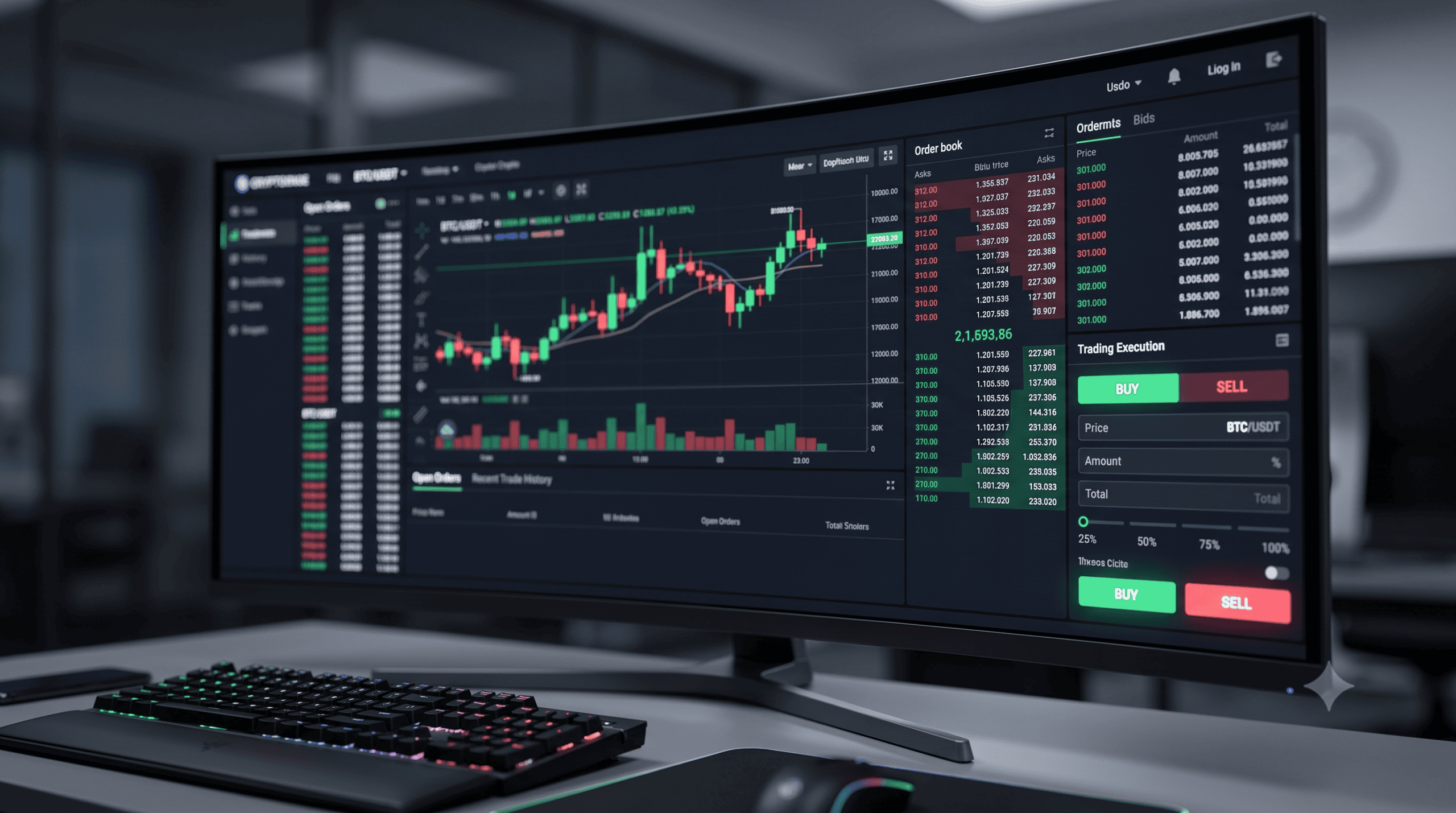
This is the most overlooked step. Before you trade a single coin, you need a safe place to do it.
Not all exchanges are created equal. Some have high fees that eat your profits, while others have terrible security. If you are weighing an exchange with built-in automated tools, our Pionex exchange review highlights the important trade-offs. For actionable crypto trading tips for beginners in 2026, though, I recommend sticking to Tier-1 exchanges like Binance, Coinbase, or Bybit. Look for low fees and high liquidity and a clean interface. If you are in a country with strict regulations, make sure the exchange is compliant so your funds don’t get frozen.
Sticking to Tier-1 exchanges ensures you have the liquidity and security necessary to execute trades without friction. To compare fees, safety protocols, and fiat deposit options across the top platforms, explore our updated 16 Best All-In-One Crypto Exchanges 2026 guide.
3. Know Your Trading Style (The 4 Types):
You cannot play the game if you don’t know your position. Are you a sprinter or a marathon runner?
- Scalping: This is high-speed trading. You hold positions for seconds or minutes to profit from tiny price changes. It is high stress and requires you to be glued to the screen.
- Day Trading: You open and close trades within the same day. You never hold a position overnight, so you can sleep peacefully without worrying about a crash while you dream.
- Swing Trading: This is my favorite for beginners. You hold positions for days or weeks to capture a “swing” or trend in the market. It requires patience but less screen time.
- Investing (Holding): You buy and hold for months or years. You believe in the long-term vision of the project and ignore short-term volatility.
Once you know your style, automation can help you stay consistent. If you are considering a cloud-based bot, our Cryptohopper review covers the features, pricing, and safety questions to check first.
Before registering on a trading platform, it pays to compare fee structures and withdrawal limits across top global exchanges. Read our in-depth Binance Exchange Review 2026 to decide which exchange fits your operational needs.
4. Choosing the Right Coins to Invest In:
Not all crypto assets are the same, so you need to categorize them to manage risk. The crypto coins list is a useful starting point for sorting the main types and their risk profiles.
- Blue Chips: Bitcoin and Ethereum are the safest plays. They move slower but are less likely to disappear. These should form the base of your portfolio.
- Mid-Caps: These are established projects like Solana or Cardano. They offer higher potential returns than Bitcoin but come with higher risk.
- Low-Caps and Memecoins: These are pure gambling. They can go up 100x, or they can go to zero in an hour. Beginners should only touch these with “play money.”
High payment processor processing fees can silently eat into your starting investment capital before you place your first order. To minimize deposit friction and preserve your funds, explore our guide on The Cheapest Ways to Buy Crypto Instantly in 2026.
5. Research and Stick to Fundamentals:

Charts are important, but you also need to know what you are buying. This is called Fundamental Analysis (FA).
Don’t just buy a coin because it has a cool logo. First, understand whether it is a coin or a token, because the difference between crypto coins and tokens affects how you evaluate the project. Read the “Whitepaper” to understand what problem the project solves. Look at the “Tokenomics” to see if the developers hold too many coins. Check if the team is public or anonymous. If a project has no real utility and an anonymous team, it is likely a scam. One of the best actionable crypto trading tips for beginners in 2026 is to ignore the hype and look at the facts.
6. Master Technical Analysis (TA):
Technical Analysis is the art of reading the past to predict the future. It is not magic, but it gives you an edge.
TA helps you identify “Support” and “Resistance” levels. Support is a floor where the price tends to stop falling because buyers step in. Resistance is a ceiling where the price tends to stop rising because sellers step in. If you buy right at a Resistance level, you are gambling against the odds.
7. Understand Candlestick Charts:
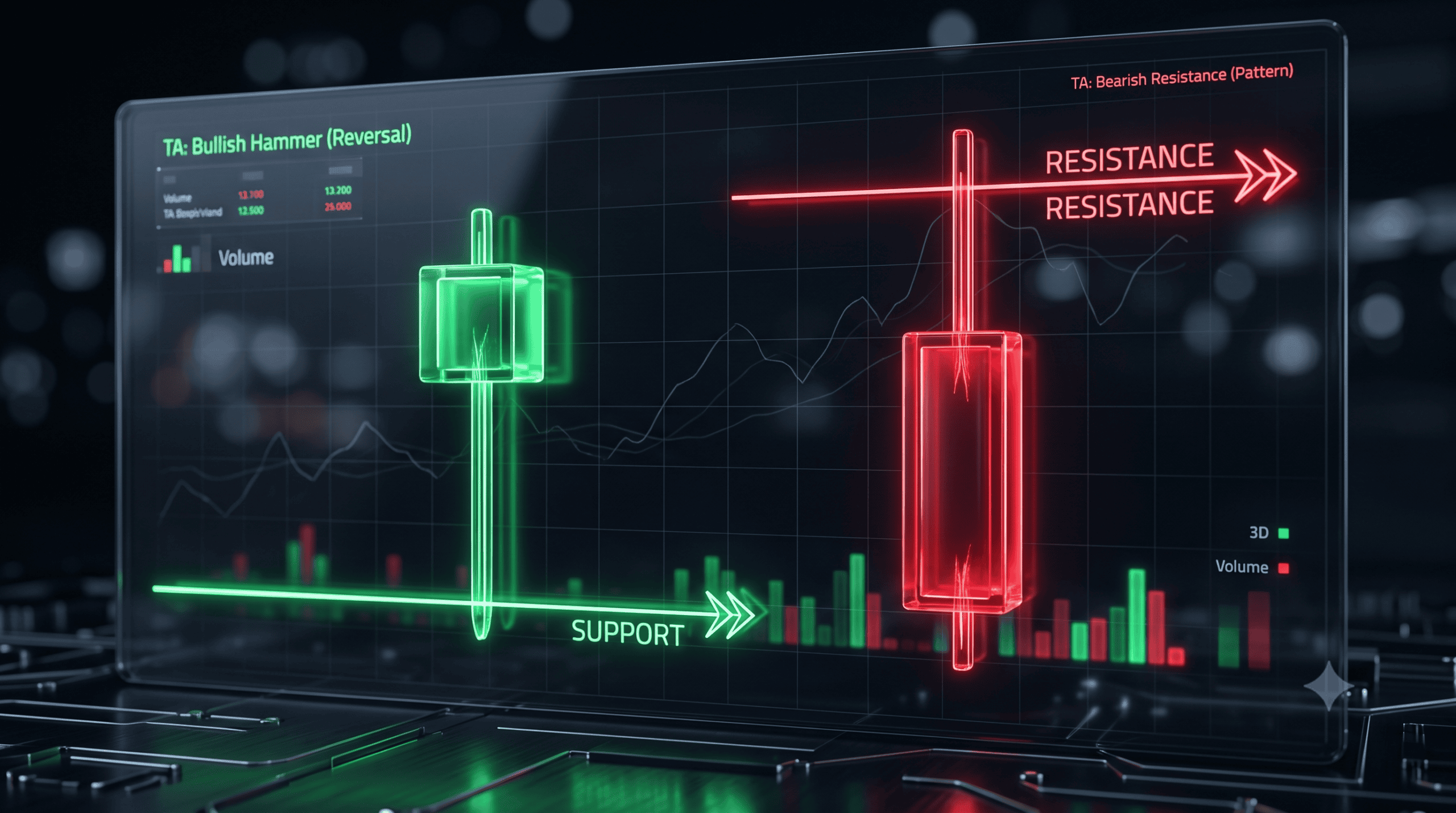
Candlesticks are the language of the market. You need to learn how to read them to understand who is winning the battle between buyers and sellers.
- The Body: The thick part shows the open and close price. A green body means buyers won and the price went up. A red body means sellers won and the price went down.
- The Wicks: The thin lines sticking out of the top and bottom show the highest and lowest price reached during that time. A long wick at the bottom often means buyers pushed the price back up, which is a bullish sign.
8. Use Crypto Indicators to Inform Decision-Making:
Think of indicators as the dashboard on your car. They don’t drive the car for you, but they tell you if you are running out of gas or driving too fast. You don’t need a math degree to use them because they are just visual tools that help you confirm what your eyes are already seeing on the chart.
- RSI (The Speedometer): This tool measures the momentum of a coin. Imagine a rubber band that can only stretch so far before it snaps back. When the RSI number goes above 70, it means the price has moved up too fast and is “overheated” or expensive, so it might be time to sell. When it drops below 30, it means the price has fallen too hard and is “on sale” or cheap, so it might be time to buy.
- Moving Averages (The Smooth Line): Crypto prices jump up and down like a crazy heartbeat, which makes it hard to see the real direction. A Moving Average takes all those jagged spikes and smooths them out into a single flowing line. If the price is above this line, the trend is generally up, and it is safe to look for buys. If the price is below this line, the trend is Down, and you should be careful.
- Warning (Keep It Clean): Do not clutter your screen with twenty different lines. It is like trying to listen to five radio stations at the same time. You will get confused and make bad decisions. Pick just two or three simple tools that you understand and ignore the rest.
Integrating these actionable crypto trading tips for beginners into your charting routine helps you spot high-probability entries before the crowd catches on.
9. Use Dollar Cost Averaging (DCA):
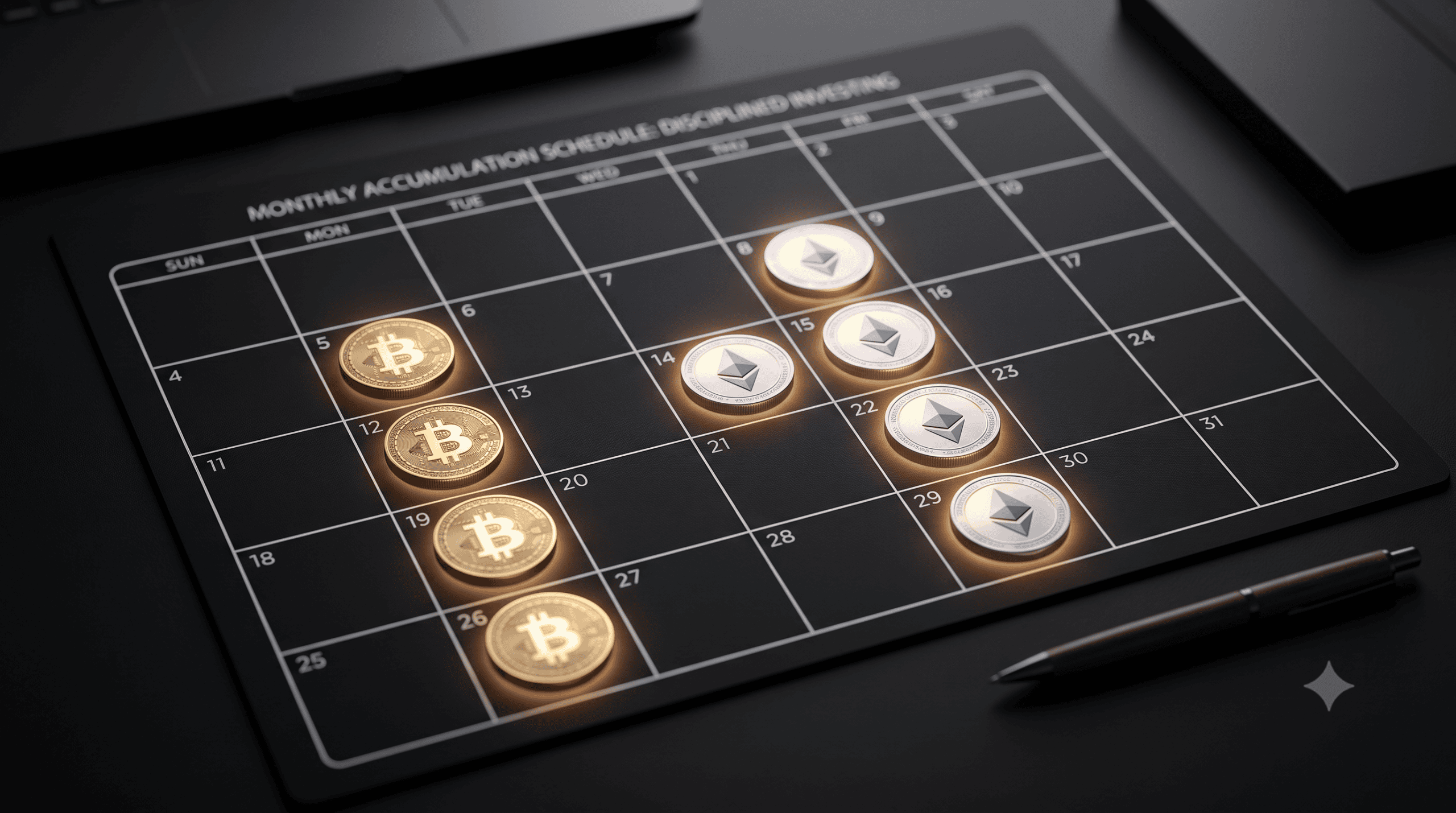
Timing the market is impossible even for pros. DCA is the strategy that removes the stress of timing.
Instead of investing $1000 all at once, you invest $100 every week for ten weeks. If the price goes down, you buy more coins for the same money, which lowers your average entry price. If the price goes up, you are already in profit. This is one of the safest actionable crypto trading tips for beginners in 2026.
While manually timing the market is stressful and often inaccurate, setting up a strict DCA schedule removes emotion from the equation entirely. To automate your daily or weekly buys without needing any technical skills, check out the 7 Best Crypto Trading Bots for Beginners in 2026 (No Coding Needed).
10. Pay Attention to Regulations and News:
Crypto does not exist in a bubble. Real-world events move the price.
If the SEC sues a major exchange, the market will dump. If a country bans Bitcoin mining, the hash rate drops. You don’t need to watch the news 24/7, but you should follow major crypto news outlets. Being aware of the “Macro” environment helps you avoid holding a bag during a regulatory crackdown.
While centralized exchanges offer deep liquidity, decentralized trading removes third-party custodial risk entirely. To understand how self-custodial protocols stack up against traditional order books, check out our analysis on CEX vs DEX vs Hybrid Exchange: The Global Crypto Battle (2026).
11. Survive First and Profit Second:
This is the golden rule. When you are new, your only job is to not lose all your money. Most beginners try to double their account in the first week.
That is how you blow up. Focus on protecting your capital. If you preserve your money, you will always have another day to trade. If you lose it all, the game is over.
Consistently practicing these actionable crypto trading tips for beginners ensures that fear and greed never dictate your position sizing
12. Ignore the Twitter “Gurus”:
Social media is full of people posting screenshots of 1000% gains.
They are lying to you. Most of these influencers are paid to pump coins, or they are only showing you their one lucky win while hiding their ten losses. Following random calls on the internet is the fastest way to go broke.
13. Master Risk Management:

This sounds boring, but it is the secret sauce. You should never risk more than 1% or 2% of your total portfolio on a single trade.
If you have $1000, then you should only risk losing $10 or $20 on one trade. This means if you are wrong 10 times in a row, you still have most of your money left.
14. Use a Stop Loss Always:
I cannot stress this enough. Entering a trade without a stop loss is like driving a car without brakes.
A stop loss is an automatic order that sells your coin if the price drops to a certain level. It prevents a small 5% loss from turning into a devastating 50% crash. You must set this before you enter the trade.
15. The Trend is Your Friend:
Don’t try to be a hero.
If Bitcoin is going up, then look for reasons to buy. If Bitcoin is going down, then look for reasons to sell or stay in cash. Trying to catch the bottom of a falling knife is dangerous.
Staying profitable across volatile market cycles requires discipline, which is why following these actionable crypto trading tips for beginners is essential for every trade.
16. Avoid Revenge Trading:

We have all been there. You lose $50 on a stupid trade, and you get angry. You immediately open a new trade with a bigger size to “make it back.”
This is called revenge trading, and it is a portfolio killer. The market does not care that you lost money. When you are emotional, your IQ drops. If you take a big loss, walk away from the screen — and, to make that easier, consider using a beginner-friendly crypto trading bot that can execute your rules even when you are not watching.
Applying these actionable crypto trading tips for beginners will keep you grounded and stop you from chasing green candles during sudden market pumps.
17. Understand Market Cycles:
Crypto moves in cycles. We have the Bull Market where everything goes up, and everyone is a genius. Then we have the Bear Market where prices crash, and tourists leave.
In 2026, we are likely in a specific phase of this cycle. Buying at the top of a 2-year bull run is financial suicide. Study the 4-year Bitcoin halving cycle.
18. Don’t Put All Your Eggs in One Basket:
Diversification is your insurance policy.
If you put 100% of your money into one random altcoin and it gets hacked, you lose everything. But if you split your money across 5 or 10 different assets, one failure won’t kill you. For the core of that diversified basket, focus on assets with strong fundamentals by using our best cryptocurrencies to invest in for the long term guide as a reference.
19. Take Profits on the Way Up:
Greed is a powerful drug. When your coin goes up 50%, you will feel like it is going to go up another 50%.
It probably won’t. Pay yourself. Sell 20% or 30% of your position when you are in profit. This locks in real money. From there, you can put some of those realized gains to work on crypto staking platforms if you want to earn passive income while holding.
20. Keep a Trading Journal:
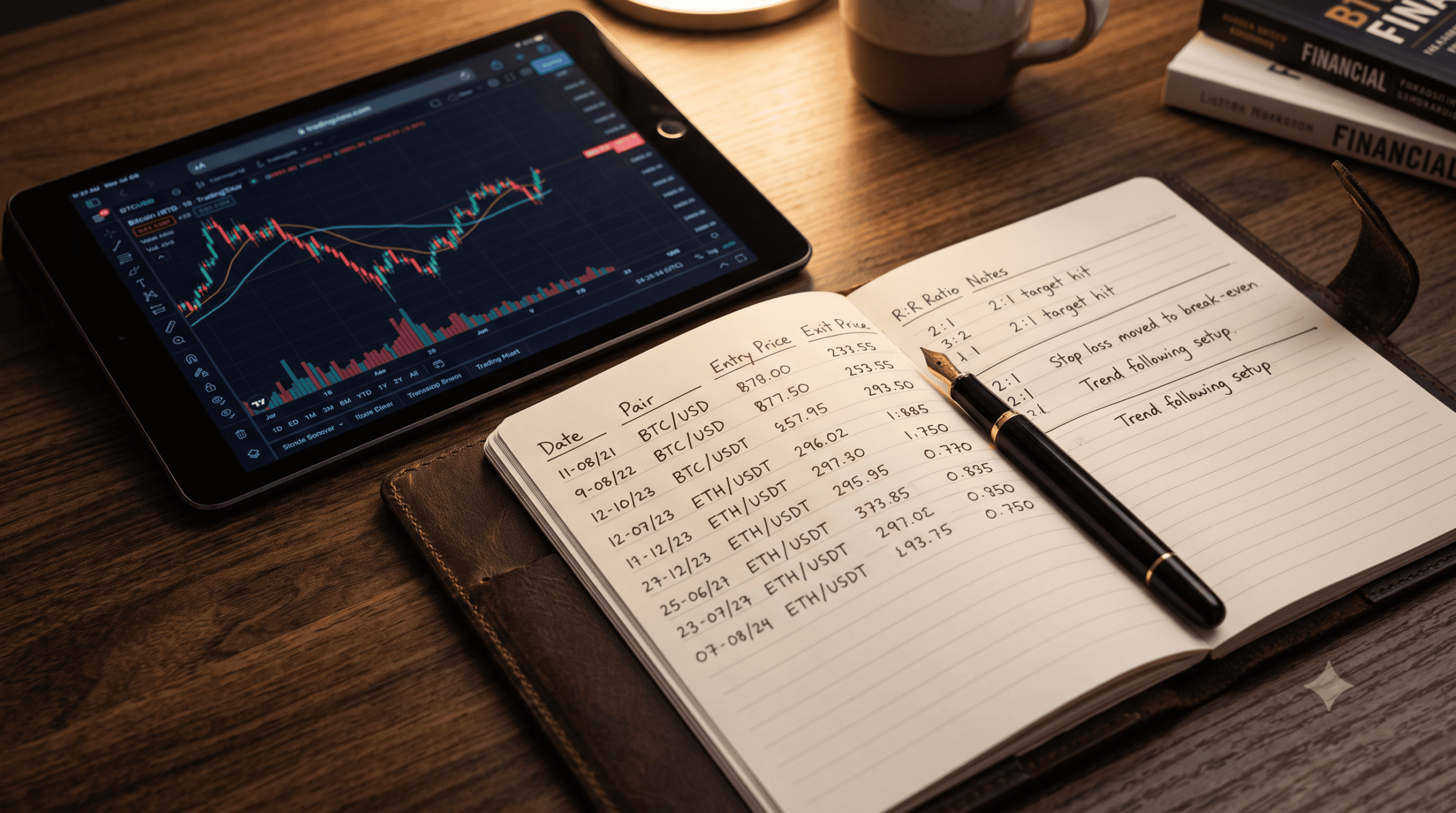
This is the homework nobody wants to do, but it makes you a pro.
Write down every trade. Why did you buy? What was your entry price? Why did you sell? Your journal will reveal your weaknesses better than any guru.
Reviewing these actionable crypto trading tips for beginners alongside your trade logs builds the systematic mindset needed for long-term growth.
21. Beware of Leverage:
Leverage is a tool that lets you trade with more money than you have. It sounds great until it destroys you.
If you use 10x leverage, a 10% drop in price wipes out 100% of your money. Beginners should stay away from leverage. Stick to “Spot” trading where you own the actual coin.
While margin trading platforms allow you to multiply your purchasing power, applying margin without strict stop-losses is the fastest way to liquidate your entire account. Once you have mastered spot trading and want to explore margin safely, review our breakdown of the 12 Best High Leverage Crypto Trading Platforms 2026.
22. Watch Bitcoin Dominance:
Bitcoin is the king. When Bitcoin sneezes, the rest of the market catches a cold.
You need to watch “Bitcoin Dominance” (BTC.D). If this chart is going up, it means Bitcoin is sucking money out of altcoins. If BTC.D is going down, it might be “Altseason.”
23. Don’t Fall for FOMO:
Fear of Missing Out is your enemy.
If you see a green candle shooting straight up, do not buy it. You missed the move. Accept it. If you buy the pump, you usually become the “bag holder” when it dumps.
24. Secure Your Crypto:

Not your keys, not your coins. To act on that rule, you need to know the main types of crypto wallets before deciding where to store your funds.
If you leave your money on an exchange, you don’t really own it. The exchange could go bankrupt. For your long-term holdings, buy a hardware wallet like a Ledger or Trezor.
Leaving your long-term holdings on a centralized exchange exposes you to unnecessary bankruptcy or third-party hacking risks. To take full self-custody of your digital assets, compare the industry’s most secure offline devices in our 5 Best Hardware Wallets 2026 comparison.
25. Stay Humble:
The market will humble you.
The moment you think you have mastered the game, the market will punch you in the face. Stay a student. Read books. Listen to podcasts. Adapt. The strategies that worked in 2021 might not work as actionable crypto trading tips for beginners in 2026.
Maximize Your Edge: Join Our Trading Community
Mastering these actionable crypto trading tips for beginners is a huge step toward trading consistency, but real-time market dynamics are always easier to navigate alongside an active community. Instead of analyzing charts and managing market volatility alone, you can learn faster by collaborating with experienced Web3 traders.
Join Our Crypto Expansion Community Now to gain access to weekly chart breakdowns, live market discussions, and dedicated support channels. Share your trade setups, get constructive feedback on your trading journal, and discover even more actionable crypto trading tips for beginners in an environment engineered for disciplined, long-term growth.
Surviving your first year in Web3 isn’t about luck—mastering these actionable crypto trading tips for beginners gives you the structural edge required to succeed.
FAQ:
Q: How much money do I need to start trading?
A: You can start with as little as $10 or $50. You do not need thousands of dollars to begin. It is actually better to start small so you can learn the ropes without risking your life savings.
Q: Which trading style is best for beginners?
A: Swing Trading is usually the best place to start. It does not require you to stare at the screen all day like scalping, and it allows you to make decisions slowly and carefully.
Q: What is the safest coin to buy for my first trade?
A: Bitcoin (BTC) is generally considered the safest asset because it has the longest history and the most liquidity. Ethereum (ETH) is a close second. Avoid meme coins until you have more experience.
Q: I don’t understand Technical Analysis. Where can I learn more?
A: Do not worry. We are currently writing detailed guides that will explain Technical Analysis and Candlestick patterns in depth. Stay tuned for those articles.
Q: Is crypto trading taxable?
A: In most countries, the answer is yes. You usually have to pay capital gains tax on your profits. Make sure to check the specific laws in your country or consult a tax professional.
A Final Note: We Are Just Scratching the Surface:
I want to be clear about one thing. Trading is a massive topic. You cannot master it by reading a single article.
In this guide, we have listed the basic actionable crypto trading tips for beginners in 2026 to get you started safely. But every single point on this list—from Technical Analysis to Risk Management—is a deep subject on its own.
Do not worry. We are going to cover all of these in detail. In our upcoming series of articles, we will explain each tip individually with charts and examples and step-by-step tutorials. Think of this guide as your syllabus and the future articles as your textbooks — and keep the Crypto Trading for Beginners Guide handy as your primer.